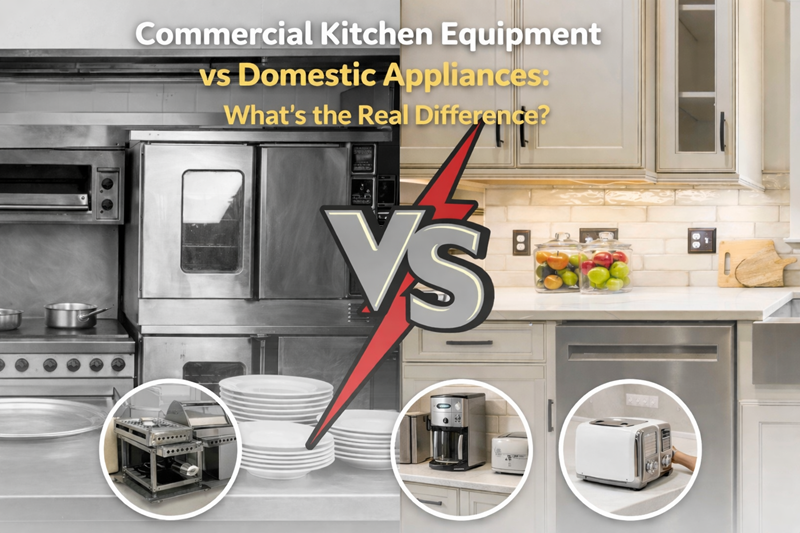

Choosing the right commercial kitchen equipment is one of the most important decisions for any food business. The efficiency of your kitchen, food quality, staff productivity, hygiene standards, and long-term profitability all depend on the equipment you invest in. Whether you’re setting up a new restaurant, expanding a hotel kitchen, launching a cloud kitchen, or upgrading an existing facility, selecting the right tools is critical for success.
Unlike home kitchens, commercial kitchens operate under high pressure - long hours, large volumes, strict hygiene requirements, and compliance regulations. This guide will help you understand every essential factor involved in choosing commercial kitchen equipment wisely.
1. Understand Your Business Type and Menu Requirements
The foundation of equipment selection begins with your business model and menu. Different food businesses require different types of equipment.
Examples:
- Restaurants & Cafes: Griddles, fryers, ovens, refrigerators
- Hotels & Institutional Kitchens: High-capacity cooking ranges, bulk refrigeration, dishwashers
- Cloud Kitchens: Compact, multi-functional equipment
- Bakeries: Deck ovens, planetary mixers, proofers
- Fast Food Outlets: Rapid-cooking equipment for high turnover
Your menu dictates:
- Cooking techniques (baking, frying, steaming)
- Required temperature ranges
- Volume and speed of production
Avoid buying unnecessary equipment that adds cost without improving output.
2. Evaluate Capacity and Production Volume
One of the most common mistakes is choosing equipment without considering daily and peak-hour demand.
Key questions to ask:
- How many meals will be prepared per day?
- What are peak service hours?
- Will your business scale in the future?
Choosing the correct capacity ensures:
- Faster service
- Reduced equipment stress
- Consistent food quality
Over-sized equipment wastes energy, while under-sized equipment slows operations and increases breakdowns.
3. Kitchen Layout and Space Optimization
Efficient kitchens are designed, not crowded.
Consider:
- Available floor space
- Ventilation and exhaust placement
- Power and gas connections
- Workflow from storage → preparation → cooking → plating
Compact, modular equipment is ideal for small kitchens and cloud kitchens. Large operations should focus on ergonomic layouts that reduce staff movement and fatigue.
4. Energy Efficiency and Operational Costs
Energy consumption is a major operating expense in commercial kitchens. Energy-efficient equipment helps reduce electricity and gas bills significantly over time.
Look for:
- Energy-star or equivalent certifications
- Faster heat recovery
- Better insulation and temperature control
Though energy-efficient machines may have a higher upfront cost, they provide long-term savings and environmental benefits.
5. Durability and Build Quality
Commercial kitchens demand equipment that can withstand continuous use.
High-quality equipment should offer:
- Stainless steel construction
- Food-grade, corrosion-resistant materials
- Heavy-duty motors and components
Durable equipment minimizes downtime, reduces maintenance costs, and improves safety.
6. Hygiene, Food Safety, and Cleaning Ease
Food safety is non-negotiable.
Choose equipment that:
- Has smooth, non-porous surfaces
- Avoids sharp corners where food residue accumulates
- Is easy to disassemble and clean
Equipment should comply with FSSAI and food safety regulations, helping prevent contamination, customer complaints, and legal penalties.
7. Compliance with Regulations and Certifications
Commercial kitchen equipment must meet regulatory and safety standards.
Important compliances include:
- Electrical safety certifications
- Gas safety approvals
- Food safety standards (FSSAI)
- Fire safety compatibility
Certified equipment protects staff, customers, and your business from compliance risks.
8. Maintenance, Warranty, and After-Sales Support
No equipment is maintenance-free. Reliable after-sales service is crucial.
Before purchasing, check:
- Warranty duration
- Availability of spare parts
- Service centres in your region
- Technical support responsiveness
Good support reduces downtime and extends the life of your equipment.
9. Budget Planning and Total Cost of Ownership
Smart buyers look beyond the initial price.
Consider:
- Purchase cost
- Installation cost
- Energy consumption
- Maintenance and repair expenses
- Expected lifespan
Low-cost equipment often results in higher long-term expenses due to breakdowns and inefficiency.
10. Supplier Reliability and Trusted Marketplaces
Buying from reliable suppliers ensures:
- Genuine products
- Transparent pricing
- Professional guidance
- Proper documentation
Modern industrial marketplaces like Metoraa simplify procurement by offering verified equipment, expert consultation, and dependable service across India.
11. Planning for Future Expansion
Your kitchen should grow with your business.
Choose equipment that:
- Can handle increased demand
- Supports upgrades or modular expansion
- Fits evolving menu requirements
Future-ready equipment prevents costly replacements.
Frequently Asked Questions (FAQs)
Q1. What are the most essential commercial kitchen equipment for a new business?
The most essential commercial kitchen equipment depends on your menu and business type. Common essentials include cooking ranges, ovens, refrigeration units, exhaust systems, food preparation tables, and dishwashers. Cloud kitchens may require compact, multi-purpose equipment, while hotels and restaurants need high-capacity machines.
Q2. How do I choose the right size and capacity of kitchen equipment?
To choose the right capacity, assess your daily production volume, peak-hour demand, and future growth plans. Equipment should handle your busiest hours without overworking. Oversized equipment wastes energy, while undersized equipment slows operations and increases wear and tear.
Q3. Is energy-efficient commercial kitchen equipment worth the investment?
Yes, energy-efficient equipment significantly reduces electricity and gas costs over time. Although the upfront cost may be higher, long-term savings, improved performance, and reduced environmental impact make it a smart investment for any food business.
Q4. What certifications should commercial kitchen equipment have in India?
Commercial kitchen equipment in India should comply with FSSAI food safety standards, electrical safety certifications, and gas safety approvals. Certified equipment ensures legal compliance, staff safety, and better hygiene practices.
Conclusion
Choosing the right commercial kitchen equipment is a strategic investment, not an expense. When selected thoughtfully, the right equipment improves efficiency, maintains hygiene, controls costs, and supports business growth. By focusing on capacity, energy efficiency, durability, compliance, and supplier reliability, you can build a kitchen that works as hard as you do.
A well-equipped kitchen is the backbone of a successful food business.