Choose the Right Commercial Kitchen Equipment Supplier
Selecting the right commercial kitchen equipment supplier is crucial for the success of any restaurant, hotel, cloud kitchen, or food service business. The right supplier provides quality equipment, reliable support, and customized solutions that improve efficiency and long-term profitability. This guide explains how to choose the best commercial kitchen equipment supplier for your business.
Author
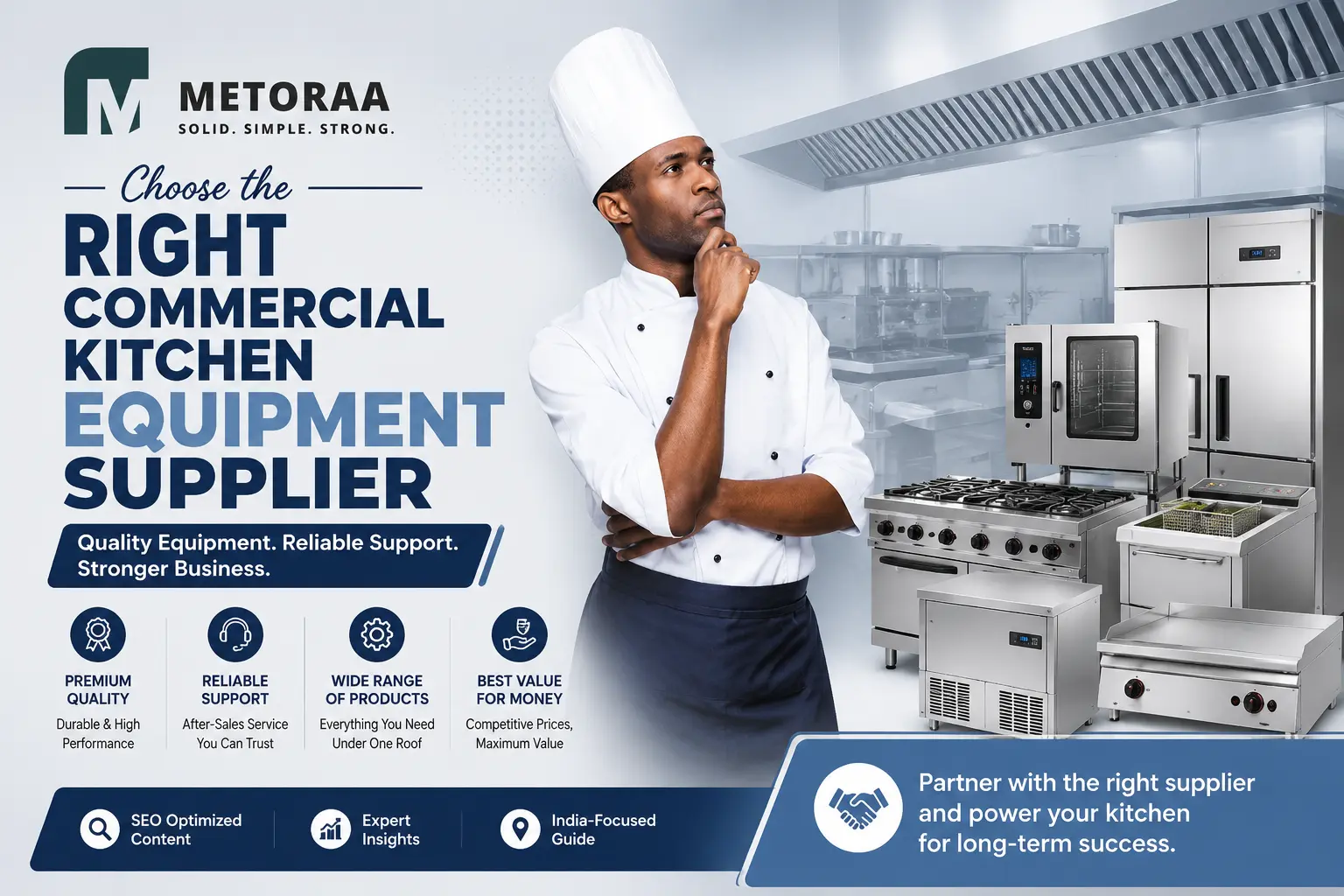
Investing in commercial kitchen equipment is one of the most significant decisions for any food service business. Whether you operate a restaurant, hotel, cloud kitchen, hospital cafeteria, educational institution, or industrial kitchen, the quality of your equipment directly impacts productivity, food quality, operational efficiency, and profitability. However, selecting the right equipment is only part of the process. Choosing the right commercial kitchen equipment supplier is equally important because a reliable supplier provides expert guidance, quality products, installation support, maintenance services, and long-term partnership opportunities. A trusted supplier helps businesses avoid costly mistakes, maximize return on investment, and create efficient kitchen environments designed for sustainable growth.
Why Choosing the Right Supplier Matters
Commercial kitchen equipment represents a substantial investment that affects daily operations for many years. A reliable supplier ensures that businesses receive high-quality products that meet operational requirements and industry standards. Beyond supplying equipment, experienced providers offer consultation, project planning, customization services, installation support, and after-sales assistance. Working with the right supplier reduces operational risks, improves project execution, and helps businesses achieve long-term success.
Understanding the Role of a Commercial Kitchen Equipment Supplier
Modern commercial kitchen suppliers do much more than sell equipment. Leading suppliers assist businesses throughout the project lifecycle, from kitchen planning and equipment selection to installation and maintenance. They evaluate menu requirements, kitchen layouts, workflow patterns, and production capacity to recommend suitable solutions. Their expertise helps businesses create efficient kitchens that maximize productivity while maintaining compliance with food safety and operational standards.
Key Factors to Consider Before Choosing a Supplier
Selecting the right supplier requires careful evaluation of several important factors including product quality, industry experience, customization capabilities, technical expertise, project portfolio, and customer support. Businesses should also assess the supplier's ability to provide comprehensive solutions that align with both current requirements and future growth objectives. A thorough evaluation process helps ensure that the chosen supplier can deliver consistent value over the long term.
Commercial Kitchen Supplier Selection Checklist
- Industry Experience
- Product Quality Standards
- Equipment Range
- Kitchen Design Expertise
- Customization Capabilities
- Installation Services
- After-Sales Support
- Maintenance Assistance
- Project Portfolio
- Technical Consultation
- Delivery Capabilities
- Regulatory Compliance Knowledge
Supplier Evaluation Criteria
| Evaluation Factor | Why It Matters | Importance |
| Industry Experience | Proven expertise | High |
| Product Quality | Long-term reliability | High |
| Customization Services | Tailored solutions | High |
| Installation Support | Smooth project execution | High |
| Technical Expertise | Better recommendations | High |
| After-Sales Service | Ongoing support | High |
| Project Portfolio | Demonstrated success | Medium |
| Maintenance Support | Reduced downtime | High |
Evaluate Industry Experience
Experience is one of the most important indicators of a supplier's ability to deliver successful projects. Suppliers with extensive industry experience understand the unique challenges faced by restaurants, hotels, cloud kitchens, and institutional food service operations. They are better equipped to recommend appropriate equipment, anticipate operational requirements, and provide solutions that improve efficiency. Experienced suppliers also possess valuable knowledge regarding industry regulations, safety standards, and emerging trends.
Assess Product Quality and Durability
The quality of commercial kitchen equipment has a direct impact on productivity, maintenance costs, and equipment lifespan. Businesses should choose suppliers that offer durable, high-performance equipment manufactured using quality materials and proven engineering practices. Investing in reliable equipment reduces downtime, minimizes repair expenses, and ensures consistent performance even during peak operating periods. Product quality should always take priority over short-term cost savings.
Look for Comprehensive Kitchen Solutions
Many businesses benefit from working with suppliers that offer complete commercial kitchen solutions rather than individual products. End-to-end service providers handle kitchen design, equipment manufacturing, stainless-steel fabrication, ventilation systems, installation, and project management under a single partnership. This integrated approach simplifies communication, improves project coordination, and ensures that all kitchen components work together efficiently.
Review Customization Capabilities
Every food service operation has unique requirements based on menu offerings, production volume, available space, and service style. Suppliers that offer customization services can design equipment and kitchen layouts tailored to specific operational needs. Customized solutions improve workflow efficiency, maximize space utilization, and help businesses achieve better long-term performance. Flexibility in design and manufacturing is often a strong indicator of supplier capability.
Analyze Installation and Project Management Services
Successful commercial kitchen projects require more than equipment delivery. Professional installation and project management services ensure that equipment is positioned correctly, utility connections are properly configured, and operational workflows are optimized. Suppliers that provide installation support reduce project delays and help businesses transition smoothly from planning to operation. Effective project management also minimizes disruptions and improves overall execution quality.
Consider After-Sales Support and Maintenance
After-sales support is critical for maintaining equipment performance and minimizing downtime. Reliable suppliers offer maintenance services, technical assistance, spare parts availability, and troubleshooting support to help businesses address operational challenges quickly. Strong after-sales service ensures that equipment continues to perform efficiently throughout its lifecycle and provides peace of mind for business owners.
Verify Compliance and Safety Standards
Commercial kitchen equipment must comply with relevant safety, hygiene, and operational regulations. Reputable suppliers understand these requirements and provide products designed to meet industry standards. Compliance helps businesses avoid legal issues, maintain food safety standards, and create safer working environments. Suppliers with strong regulatory knowledge can also assist with certification and inspection requirements.
Review Previous Projects and Client References
Examining a supplier's project portfolio provides valuable insight into their expertise and capabilities. Businesses should review completed projects, client testimonials, and case studies to evaluate the supplier's track record. Successful projects across restaurants, hotels, cloud kitchens, hospitals, and institutional kitchens demonstrate versatility and reliability. Speaking with previous clients can provide additional confidence in the supplier's ability to deliver results.
Importance of Ventilation and Infrastructure Expertise
Commercial kitchen performance depends not only on cooking equipment but also on supporting infrastructure such as ventilation systems, stainless-steel fabrication, refrigeration solutions, and utility planning. Suppliers with expertise in these areas can provide integrated solutions that improve efficiency and operational reliability. A comprehensive understanding of kitchen infrastructure helps ensure that every component contributes to overall performance.
Common Mistakes When Selecting a Supplier
Many businesses choose suppliers based solely on price without considering quality, service, and long-term value. Other common mistakes include failing to verify installation capabilities, overlooking after-sales support, neglecting future expansion requirements, and not reviewing project experience. These decisions can lead to increased maintenance costs, operational inefficiencies, and costly equipment replacements. A strategic evaluation process helps avoid these challenges and ensures a better return on investment.
Commercial Kitchen Equipment Trends Influencing Supplier Selection in 2026
As the food service industry evolves, suppliers are increasingly offering smart kitchen technologies, IoT-enabled equipment, energy-efficient appliances, automation solutions, and sustainable infrastructure options. Businesses seeking future-ready kitchens should consider suppliers capable of delivering innovative solutions that support evolving operational requirements. Technology integration, energy efficiency, and scalability are becoming key differentiators among leading suppliers.
Why Businesses Choose Metoraa
Metoraa is a trusted commercial kitchen equipment supplier and solution provider serving restaurants, hotels, cloud kitchens, hospitals, educational institutions, and industrial food service facilities. Our expertise includes commercial kitchen design, equipment manufacturing, stainless-steel fabrication, ventilation systems, refrigeration solutions, installation, and project management. We focus on delivering customized, high-performance solutions that improve operational efficiency and support long-term business growth.
Metoraa's End-to-End Commercial Kitchen Solutions
Metoraa provides complete commercial kitchen services from concept development and design planning to equipment supply, installation, and ongoing support. Our team works closely with clients to understand their operational goals and deliver tailored solutions that maximize productivity, enhance workflow, and ensure compliance with industry standards. By combining technical expertise with innovative design, Metoraa helps businesses create efficient and scalable kitchen environments.
Conclusion
Choosing the right commercial kitchen equipment supplier is essential for building a successful and efficient food service operation. A reliable supplier provides more than equipment—they offer expertise, guidance, installation support, maintenance services, and long-term partnership value. By evaluating experience, product quality, customization capabilities, project management expertise, and after-sales support, businesses can make informed decisions that support operational excellence and future growth. Metoraa delivers comprehensive commercial kitchen solutions designed to help businesses achieve maximum efficiency, reliability, and profitability.