Commercial Kitchen Equipment List for India 2026
Set up a successful restaurant with the right commercial kitchen equipment. Explore the complete 2026 India equipment list, including cooking stations, refrigeration, ventilation, and storage solutions. Learn how Metoraa helps businesses design efficient, high-performance commercial kitchens for better operations and food quality.
Author
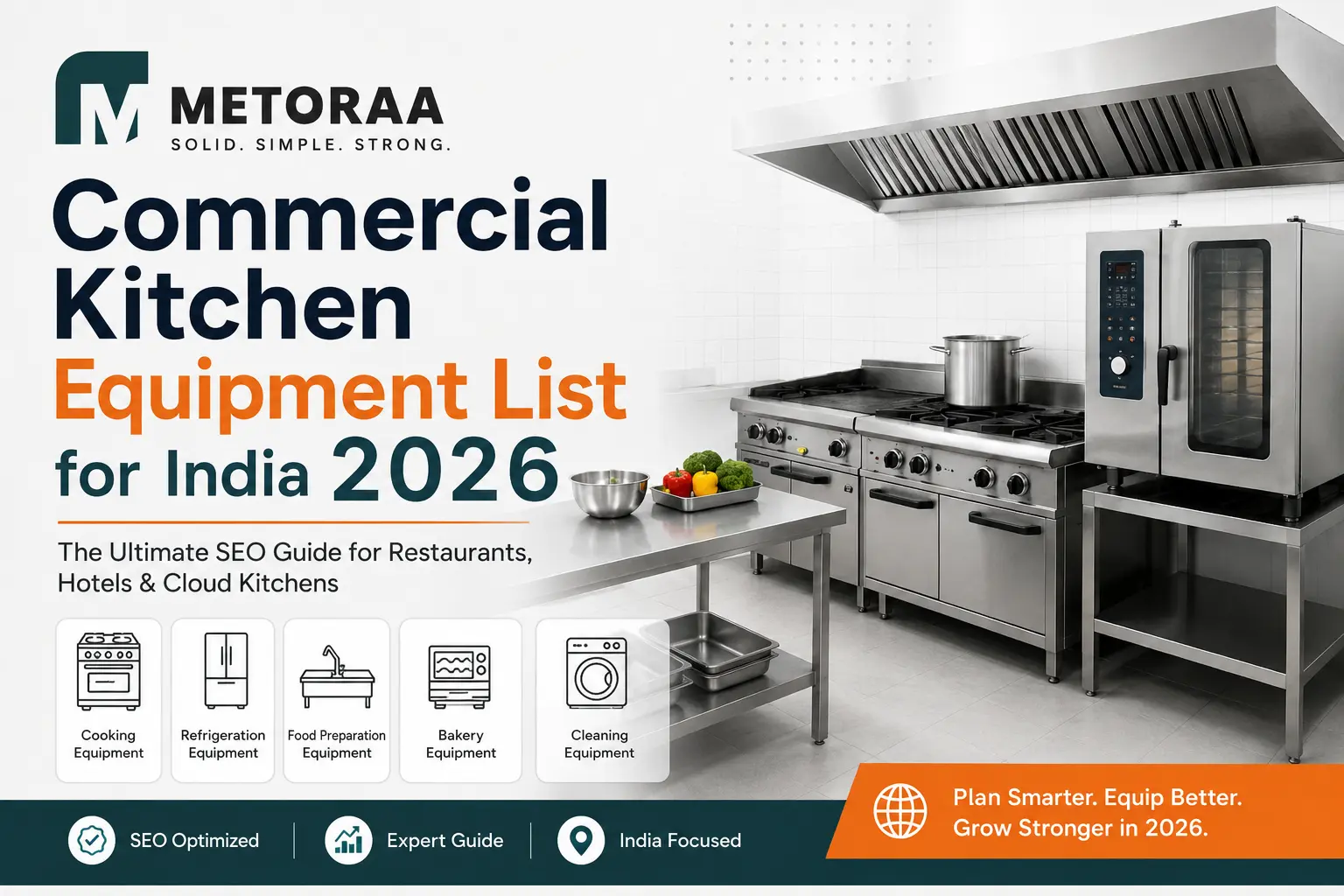
The Indian food service industry is experiencing rapid growth, driven by increasing demand for restaurants, hotels, cloud kitchens, cafes, hospitals, and institutional dining facilities. As competition continues to rise, food businesses must invest in modern commercial kitchen equipment that enhances productivity, ensures food safety, and improves customer satisfaction. A properly equipped kitchen not only supports efficient food preparation but also reduces operating costs and creates a scalable foundation for future business growth. Whether you are opening a new restaurant or upgrading an existing facility, understanding the essential commercial kitchen equipment required in 2026 is critical for long-term success.
Why Choosing the Right Commercial Kitchen Equipment Matters
Commercial kitchen equipment forms the backbone of every food service operation. The right equipment improves workflow efficiency, reduces preparation and cooking time, minimizes food waste, and helps maintain consistent food quality. High-quality equipment also lowers maintenance expenses, improves employee productivity, and ensures compliance with food safety regulations. As restaurants face increasing customer expectations and rising operational costs, investing in reliable commercial kitchen solutions has become a strategic business decision rather than simply an operational requirement.
Understanding Commercial Kitchen Infrastructure
Commercial kitchen infrastructure includes all equipment, workstations, ventilation systems, storage solutions, utility connections, and stainless-steel fabrication required to support food preparation and service operations. A professionally designed kitchen ensures smooth movement between receiving, storage, preparation, cooking, serving, and cleaning areas. Effective infrastructure planning helps maximize available space, improve workflow efficiency, and create a safe working environment. Businesses that prioritize kitchen infrastructure during the planning stage often experience better operational performance and greater long-term profitability.
Types of Commercial Kitchens in India
Commercial kitchens are designed based on the specific needs of different food service businesses. Restaurant kitchens focus on fast service and menu flexibility, while hotel kitchens require large-scale production capabilities to serve multiple dining outlets. Cloud kitchens are optimized for delivery operations and efficient order processing. Hospital and healthcare kitchens emphasize hygiene and nutritional compliance, while institutional kitchens in schools, colleges, and factories prioritize high-volume meal production. Each type of kitchen requires specialized equipment and layout planning to meet operational objectives effectively.
Essential Commercial Kitchen Equipment for Restaurants
Every restaurant requires a combination of cooking, refrigeration, preparation, cleaning, storage, and ventilation equipment to support daily operations. Choosing equipment that aligns with menu requirements and production volume ensures maximum efficiency while maintaining food quality standards.
Commercial Kitchen Equipment Checklist
- Commercial Gas Ranges
- Combination Ovens
- Deep Fryers
- Griddles
- Char broilers
- Steamers
- Walk-In Refrigerators
- Reach-In Refrigerators
- Deep Freezers
- Food Processors
- Vegetable Cutters
- Dough Kneaders
- Mixers and Blenders
- Dishwashers
- Pot Wash Stations
- Stainless-steel Work Tables
- Storage Racks
- Exhaust Hoods
- Fresh Air Systems
- Ventilation Equipment
Commercial Kitchen Equipment Categories and Uses
| Equipment Category | Purpose | Examples |
| Cooking Equipment | Food preparation and cooking | Gas Ranges, Ovens, Fryers |
| Refrigeration Equipment | Food preservation and storage | Walk-In Coolers, Freezers |
| Food Preparation Equipment | Faster processing of ingredients | Cutters, Mixers, Kneaders |
| Washing Equipment | Cleaning utensils and cookware | Dishwashers, Sink Units |
| Storage Equipment | Organizing inventory and supplies | Shelving, Racks, Cabinets |
| Ventilation Systems | Heat and smoke removal | Exhaust Hoods, Air Systems |
| Stainless-steel Fabrication | Hygienic workspaces | Tables, Counters, Shelves |
| Utility Equipment | Supporting kitchen operations | Trolleys, Waste Systems |
Commercial Kitchen Layout Planning Best Practices
A well-planned commercial kitchen layout significantly impacts operational efficiency and staff productivity. The ideal layout follows a logical workflow that begins with receiving raw materials and continues through storage, preparation, cooking, serving, and cleaning. Proper placement of equipment minimizes unnecessary movement and reduces the risk of accidents. Strategic space planning also improves communication among staff members and enables faster service during peak business hours. Professional kitchen designers carefully evaluate menu requirements, production volume, and available space to create layouts that maximize efficiency while ensuring compliance with industry regulations.
Commercial Kitchen Ventilation Systems
Ventilation is one of the most important components of commercial kitchen design. Cooking processes generate heat, smoke, grease particles, and odors that can negatively affect employee comfort and food preparation environments. A properly designed ventilation system removes airborne contaminants and maintains healthy indoor air quality. Modern ventilation solutions include exhaust hoods, fresh air systems, grease filters, ducting networks, and exhaust fans that work together to create a safe and comfortable workspace. Effective ventilation also extends equipment lifespan and helps businesses comply with fire and safety regulations.
Importance of Stainless-steel Equipment in Commercial Kitchens
Stainless-steel is widely regarded as the industry standard for commercial kitchen equipment due to its durability, hygiene, and corrosion resistance. Its smooth, non-porous surface prevents bacterial growth and makes cleaning easier, helping businesses maintain strict food safety standards. Stainless-steel equipment can withstand heavy daily use while retaining its structural integrity and professional appearance. From work tables and shelving units to sinks and storage solutions, stainless-steel plays a vital role in creating efficient and hygienic kitchen environments.
Energy-Efficient Commercial Kitchen Equipment
Energy efficiency has become a major consideration for restaurant owners seeking to reduce operating expenses and improve sustainability. Modern commercial kitchen equipment is designed to deliver high performance while consuming less electricity and fuel. Energy-efficient refrigeration systems, induction cooking technology, smart ovens, and advanced ventilation systems help businesses lower utility bills and reduce their environmental impact. Over time, these savings can significantly improve profitability while supporting environmentally responsible business practices.
Common Mistakes to Avoid When Purchasing Commercial Kitchen Equipment
Many businesses make costly mistakes during the equipment selection process. Choosing equipment solely based on price rather than performance and durability can result in frequent breakdowns and higher maintenance costs. Poor space planning may create workflow bottlenecks that reduce productivity, while underestimating future capacity requirements can limit business growth. Inadequate ventilation systems and improper equipment placement can also negatively impact employee comfort and safety. Consulting experienced commercial kitchen professionals helps businesses avoid these mistakes and make informed investment decisions.
Latest Commercial Kitchen Trends in India 2026
The commercial kitchen industry continues to evolve as technology and customer expectations advance. Smart kitchen equipment equipped with IoT connectivity enables real-time monitoring and predictive maintenance. Modular kitchen designs provide flexibility for expanding businesses, while automation technologies improve consistency and efficiency in food preparation. Energy-efficient appliances and sustainable kitchen practices are becoming increasingly important as businesses seek to reduce operating costs and environmental impact. Restaurants that adopt these innovations position themselves for long-term success in an increasingly competitive market.
How Commercial Kitchen Equipment Impacts Restaurant Profitability
Commercial kitchen equipment directly influences operational efficiency, food quality, and customer satisfaction. Efficient equipment reduces preparation time, minimizes waste, and ensures consistent food production. Faster service and improved quality contribute to positive customer experiences, increasing repeat business and customer loyalty. Additionally, reliable equipment reduces downtime and maintenance costs, allowing restaurant owners to focus on growth and profitability. Investing in high-quality kitchen infrastructure ultimately creates a strong competitive advantage in the food service industry.
Why Restaurants Choose Metoraa
Metoraa specializes in delivering complete commercial kitchen solutions for restaurants, hotels, cloud kitchens, healthcare facilities, educational institutions, and industrial food service operations. Our expertise includes kitchen design, equipment manufacturing, stainless-steel fabrication, ventilation systems, project management, installation, and after-sales support. By combining innovative engineering with industry best practices, Metoraa helps businesses create efficient, reliable, and future-ready commercial kitchens that support operational excellence and sustainable growth.
Conclusion
A successful restaurant begins with a well-designed and properly equipped commercial kitchen. From cooking equipment and refrigeration systems to ventilation and stainless-steel infrastructure, every element contributes to efficiency, food quality, safety, and profitability. As India's food service industry continues to expand in 2026, businesses that invest in professional commercial kitchen solutions will be better positioned to meet customer expectations and achieve long-term success. Partnering with experienced providers like Metoraa ensures access to customized kitchen infrastructure designed to support both current operational needs and future growth objectives.