Commercial Kitchen Project Planning Guide
Successful commercial kitchen projects require careful planning, expert design, quality equipment, and professional installation. Whether building a restaurant, hotel kitchen, cloud kitchen, or institutional food service facility, a structured project plan ensures efficiency, compliance, and long-term success. This guide covers every stage of commercial kitchen project planning.
Author
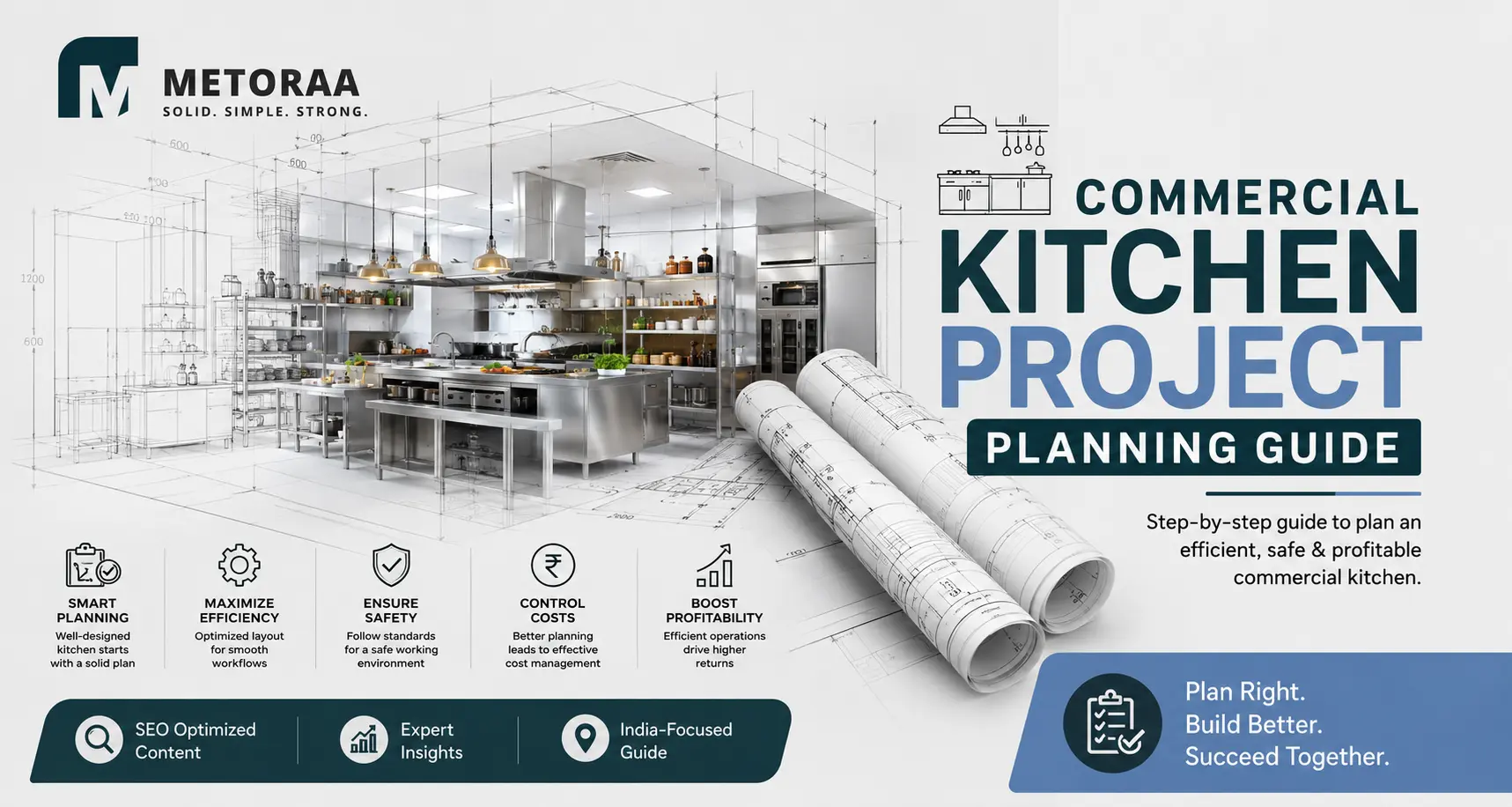
Commercial kitchen projects involve much more than purchasing equipment and arranging workstations. A successful commercial kitchen requires strategic planning, workflow optimization, infrastructure development, equipment selection, ventilation design, and professional installation. Whether the project involves a restaurant, hotel, cloud kitchen, hospital, educational institution, or industrial cafeteria, every stage must be carefully managed to ensure operational efficiency and regulatory compliance. Effective project planning helps businesses avoid costly delays, maximize space utilization, improve productivity, and create kitchen environments capable of supporting long-term growth. Understanding the complete project lifecycle enables business owners to make informed decisions and achieve better project outcomes.
Why Commercial Kitchen Project Planning Matters
Commercial kitchen projects involve significant investments in equipment, infrastructure, utilities, and labour. Poor planning can result in workflow inefficiencies, budget overruns, installation delays, and operational challenges. Proper project planning ensures that every component of the kitchen is aligned with business objectives, production requirements, and future expansion needs. A structured approach reduces risks while improving project execution and long-term operational performance.
Understanding the Commercial Kitchen Project Lifecycle
Every commercial kitchen project follows a series of interconnected phases that move from concept development to operational readiness. These stages include requirement analysis, design planning, equipment selection, infrastructure development, fabrication, installation, testing, and commissioning. Managing each phase effectively helps maintain timelines, control costs, and ensure that all systems work together seamlessly. A comprehensive project plan serves as a roadmap that guides stakeholders through every stage of development.
Key Objectives of Commercial Kitchen Planning
The primary objective of project planning is to create a kitchen that supports efficient workflow, food safety, operational flexibility, and future growth. Successful projects balance performance, compliance, sustainability, and cost-effectiveness while meeting the specific needs of the business. Well-planned kitchens improve productivity, reduce maintenance costs, enhance employee satisfaction, and support consistent food quality.
Commercial Kitchen Project Planning Checklist
- Business Requirement Analysis
- Menu Planning Assessment
- Kitchen Layout Design
- Equipment Selection
- Ventilation Planning
- Utility Infrastructure Design
- Stainless-steel Fabrication
- Storage Planning
- Fire Safety Integration
- Installation Management
- Testing and Commissioning
- Staff Training and Handover
Commercial Kitchen Project Stages
| Project Stage | Purpose | Importance |
| Requirement Analysis | Define operational needs | High |
| Kitchen Design | Optimize workflow | High |
| Equipment Selection | Support food production | High |
| Ventilation Planning | Ensure air quality | High |
| Infrastructure Development | Support operations | High |
| Fabrication & Manufacturing | Create custom solutions | High |
| Installation | Implement design plan | High |
| Testing & Commissioning | Verify performance | High |
Phase 1: Requirement Analysis and Feasibility Study
Every successful commercial kitchen project begins with a detailed assessment of business goals, menu offerings, production capacity, customer volume, and available space. This stage helps determine equipment requirements, staffing needs, utility demands, and operational workflows. A feasibility study evaluates project viability while identifying potential challenges and opportunities. Proper analysis ensures that design decisions align with long-term business objectives and operational requirements.
Phase 2: Commercial Kitchen Design and Layout Planning
Kitchen design is one of the most critical phases of project planning because it directly influences workflow efficiency and productivity. Designers create layouts that support logical movement between receiving, storage, preparation, cooking, service, and cleaning areas. Effective layouts reduce unnecessary movement, improve communication, and maximize available space. Professional kitchen design also incorporates compliance requirements, safety standards, and future expansion considerations.
Phase 3: Equipment Selection and Specification
Choosing the right equipment is essential for achieving operational efficiency and food quality goals. Equipment specifications should be based on menu requirements, production volume, available space, and energy efficiency objectives. Commercial cooking equipment, refrigeration systems, preparation tools, dishwashing equipment, and storage solutions must work together to support daily operations. Selecting reliable and durable equipment helps reduce maintenance costs and improve long-term performance.
Phase 4: Ventilation and Utility Planning
Commercial kitchens require carefully designed ventilation and utility systems to support safe and efficient operations. Ventilation systems remove heat, smoke, grease, and odors while maintaining indoor air quality. Utility planning includes electrical systems, gas pipelines, water supply, drainage networks, and backup power solutions. Proper coordination between equipment and infrastructure ensures uninterrupted operations and compliance with safety regulations.
Phase 5: Stainless-steel Fabrication and Infrastructure Development
Stainless-steel fabrication is a major component of commercial kitchen construction. Worktables, sinks, counters, storage racks, shelving systems, and preparation stations are often custom-built to suit the kitchen layout. High-quality stainless-steel infrastructure enhances durability, hygiene, and workflow efficiency. Custom fabrication also helps maximize space utilization while supporting specific operational requirements.
Phase 6: Installation and Equipment Positioning
Installation transforms the project from design concepts into a functional working environment. During this phase, equipment is positioned according to layout plans, utility connections are completed, and infrastructure components are integrated into the overall system. Professional installation ensures that equipment operates correctly, workflows remain efficient, and safety standards are maintained throughout the facility.
Phase 7: Testing and Commissioning
Before the kitchen becomes operational, all systems must undergo thorough testing and commissioning. This process verifies that equipment, ventilation systems, utilities, refrigeration units, and safety systems function as intended. Testing identifies potential issues before operations begin, reducing the risk of downtime and ensuring a smooth transition into daily use. Proper commissioning also helps validate compliance with performance and safety requirements.
Importance of Budget Planning
Budget planning plays a crucial role in commercial kitchen project management. Project costs typically include design services, equipment purchases, ventilation systems, stainless-steel fabrication, utility infrastructure, installation, and commissioning. A detailed budget helps businesses allocate resources effectively, monitor expenditures, and avoid unexpected costs. Proper financial planning also supports informed decision-making throughout the project lifecycle.
Managing Project Timelines Effectively
Timely project completion is essential for controlling costs and minimizing operational disruptions. Effective project scheduling involves coordinating design teams, manufacturers, installers, contractors, and suppliers to ensure smooth execution. Clear milestones and communication channels help maintain progress while reducing the likelihood of delays. Professional project management is often critical to achieving on-time delivery and successful implementation.
Common Commercial Kitchen Project Challenges
Commercial kitchen projects can encounter challenges such as budget overruns, equipment delivery delays, infrastructure limitations, regulatory compliance issues, and changing operational requirements. Inadequate planning often increases the likelihood of these problems. Working with experienced commercial kitchen specialists helps businesses identify risks early and develop strategies to address potential challenges before they impact project outcomes.
Latest Trends in Commercial Kitchen Project Planning for 2026
Modern commercial kitchen projects increasingly incorporate smart technologies, automation systems, IoT-enabled equipment, energy-efficient appliances, and sustainable design principles. Businesses are focusing on scalable infrastructure that can adapt to changing operational needs while reducing environmental impact. Modular layouts and cloud kitchen-ready designs are also becoming popular as food service operations continue to evolve. These innovations help create future-ready kitchens that deliver long-term value and operational flexibility.
Why Businesses Choose Metoraa
Metoraa provides complete commercial kitchen project solutions for restaurants, hotels, cloud kitchens, hospitals, educational institutions, and industrial food service facilities. Our services include project planning, kitchen design, equipment manufacturing, stainless-steel fabrication, ventilation systems, utility planning, installation, and project management. We combine technical expertise with industry knowledge to deliver efficient, compliant, and scalable commercial kitchen environments.
Metoraa's End-to-End Project Management Approach
Metoraa manages every stage of the commercial kitchen project lifecycle, ensuring seamless coordination between design, manufacturing, installation, and commissioning teams. Our structured approach minimizes risks, controls costs, and delivers projects on schedule. By focusing on quality, innovation, and customer satisfaction, we help businesses create commercial kitchens that support operational excellence and long-term growth.
Conclusion
Commercial kitchen project planning is the foundation of a successful food service operation. From requirement analysis and design development to installation and commissioning, every phase plays a critical role in determining operational efficiency and business success. Proper planning helps optimize workflows, control costs, ensure compliance, and support future expansion. Partnering with experienced experts like Metoraa ensures access to comprehensive project management solutions that deliver reliable, high-performance commercial kitchens tailored to your business needs.