Commercial Kitchen Setup Cost in India: Complete Breakdown
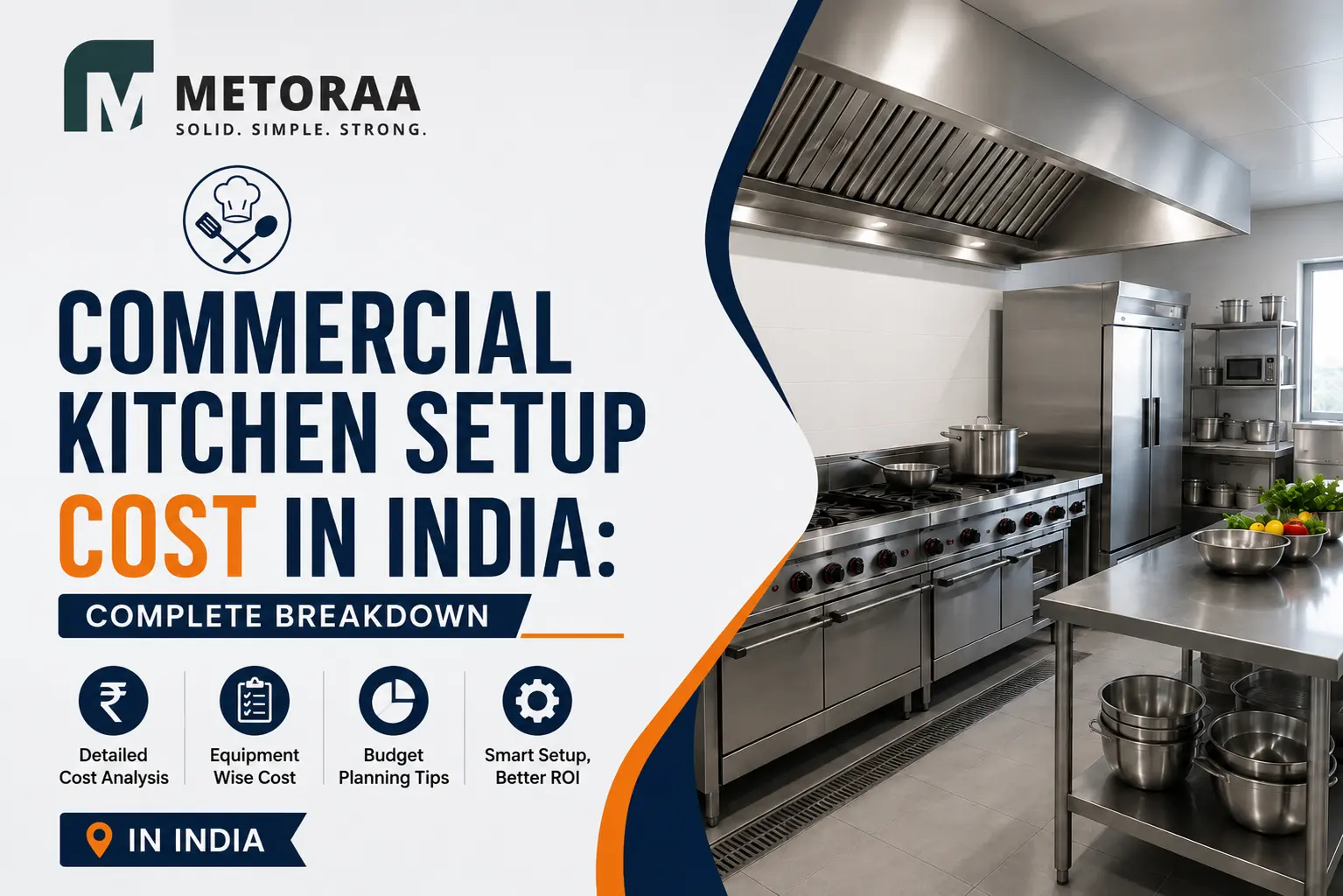
Planning a commercial kitchen requires careful budgeting and strategic investment. From cooking equipment and refrigeration systems to ventilation and stainless-steel fabrication, multiple factors influence the overall setup cost. This guide provides a complete breakdown of commercial kitchen setup costs in India and helps businesses make informed decisions.
Author
The Indian food service industry continues to expand rapidly, creating new opportunities for restaurants, hotels, cloud kitchens, hospitals, educational institutions, and industrial cafeterias. One of the most important considerations when launching a food service business is understanding the commercial kitchen setup cost. The total investment depends on factors such as kitchen size, menu complexity, equipment selection, infrastructure requirements, and customization needs. A properly planned commercial kitchen not only improves operational efficiency but also delivers long-term value by reducing maintenance costs, minimizing downtime, and supporting future business growth. Understanding the various cost components helps businesses create realistic budgets and avoid unexpected expenses during project execution.
Why Understanding Commercial Kitchen Setup Costs is Important
Many business owners underestimate the investment required to build a fully functional commercial kitchen. Beyond equipment purchases, costs often include kitchen design, ventilation systems, utility installations, stainless-steel fabrication, storage solutions, safety systems, and project management. Having a clear understanding of these expenses allows businesses to allocate resources effectively, secure financing when necessary, and ensure that every component contributes to operational success and regulatory compliance.
Factors That Influence Commercial Kitchen Setup Cost in India
Commercial kitchen setup costs vary significantly depending on business type, production capacity, menu requirements, and location. Restaurants with extensive menus generally require more cooking and preparation equipment than specialized food outlets. Hotels often need larger kitchens with multiple production zones, while cloud kitchens prioritize efficient layouts and delivery-focused operations. Additional factors such as energy-efficient equipment, imported appliances, custom fabrication, and advanced automation systems can also impact the overall investment required.
Types of Commercial Kitchens and Their Typical Investment Levels
Different food service businesses require different levels of investment based on operational complexity and production volume. Small cafés and quick-service restaurants typically require lower capital investment compared to hotels, institutional kitchens, and large-scale catering facilities. Cloud kitchens often focus on optimizing efficiency within smaller spaces, while hospital and industrial kitchens require specialized infrastructure to support high-volume food production and strict hygiene standards.
Major Cost Components of a Commercial Kitchen Setup
Understanding the major cost categories helps businesses prioritize investments and plan effectively for project execution.
Commercial Kitchen Setup Cost Checklist
- Commercial Kitchen Design & Planning
- Cooking Equipment
- Refrigeration Systems
- Food Preparation Equipment
- Ventilation Systems
- Stainless-steel Fabrication
- Dishwashing Equipment
- Utility Installations
- Fire Safety Systems
- Storage Solutions
- Installation & Commissioning
- Project Management Services
- Maintenance Planning
- Staff Training Requirements
Estimated Commercial Kitchen Cost Breakdown
| Cost Component | Share of Total Budget | Importance |
| Kitchen Design & Planning | 5% – 10% | High |
| Cooking Equipment | 20% – 30% | High |
| Refrigeration Equipment | 10% – 15% | High |
| Food Preparation Equipment | 5% – 10% | Medium |
| Ventilation Systems | 10% – 15% | High |
| Stainless-steel Fabrication | 10% – 20% | High |
| Dishwashing Systems | 5% – 10% | Medium |
| Utility Infrastructure | 5% – 10% | High |
| Safety Systems | 2% – 5% | High |
| Installation & Project Management | 5% – 10% | Medium |
Commercial Kitchen Design and Planning Costs
Professional kitchen planning is one of the most important investments in any commercial kitchen project. Design costs typically include workflow analysis, space utilization planning, equipment positioning, utility mapping, ventilation planning, and compliance reviews. A professionally designed kitchen improves efficiency, reduces operational bottlenecks, and minimizes costly modifications during later stages of the project. Investing in expert planning often generates significant long-term savings through improved productivity and optimized resource utilization.
Cooking Equipment Costs
Cooking equipment usually represents the largest portion of a commercial kitchen budget. Equipment such as gas ranges, ovens, fryers, griddles, steamers, and specialized cooking systems must be selected based on menu requirements and production capacity. High-quality cooking equipment provides better performance, durability, and energy efficiency, making it a worthwhile investment for businesses seeking long-term operational reliability and reduced maintenance expenses.
Refrigeration Equipment Costs
Commercial refrigeration systems play a critical role in preserving food quality and maintaining food safety standards. Refrigeration costs vary depending on storage requirements, capacity, and technology. Walk-in refrigerators, deep freezers, blast chillers, display coolers, and cold storage solutions are commonly included in commercial kitchen projects. Energy-efficient refrigeration systems may involve higher upfront costs but often deliver significant savings through reduced utility consumption over time.
Ventilation System Costs
A commercial kitchen ventilation system is essential for removing heat, smoke, grease particles, and cooking odors. Ventilation costs depend on kitchen size, cooking volume, equipment configuration, and regulatory requirements. Proper ventilation improves air quality, enhances employee comfort, protects equipment, and supports fire safety compliance. Investing in a professionally designed ventilation system helps prevent operational challenges and contributes to a healthier working environment.
Stainless-steel Fabrication Costs
Stainless-steel fabrication is a major component of commercial kitchen infrastructure. Worktables, counters, sinks, storage racks, shelves, and preparation stations are typically custom fabricated to match the kitchen layout and workflow requirements. Stainless-steel remains the preferred material due to its durability, hygiene, corrosion resistance, and ease of maintenance. Customized fabrication solutions help maximize space utilization while creating efficient and organized work environments.
Utility and Infrastructure Costs
Commercial kitchens require reliable utility infrastructure to support equipment operation and day-to-day activities. These costs include electrical systems, gas pipelines, water supply networks, drainage systems, lighting, and backup power solutions. Proper utility planning ensures uninterrupted operations and supports the efficient functioning of all kitchen equipment. Neglecting infrastructure requirements can lead to costly delays and performance issues after installation.
Fire Safety and Compliance Costs
Fire safety systems are mandatory in commercial kitchens and should be incorporated during the planning stage. These systems may include fire suppression equipment, emergency exits, smoke detection systems, safety signage, and compliance certifications. Investing in fire safety measures helps protect employees, customers, equipment, and business assets while ensuring adherence to regulatory requirements.
How to Reduce Commercial Kitchen Setup Costs
Businesses can control setup costs by prioritizing essential equipment, optimizing kitchen layouts, investing in energy-efficient appliances, and working with experienced commercial kitchen solution providers. Proper planning helps avoid unnecessary purchases, reduces construction modifications, and improves long-term operational efficiency. Selecting durable equipment and quality infrastructure also minimizes maintenance and replacement costs over the life of the facility.
Common Budgeting Mistakes to Avoid
Many businesses underestimate installation expenses, overlook utility infrastructure requirements, and fail to account for future expansion plans. Choosing equipment solely based on price rather than performance can also result in higher operating costs over time. Poor space planning often creates workflow inefficiencies that reduce productivity and increase labour requirements. Working with professional commercial kitchen consultants helps businesses avoid these common budgeting mistakes and achieve better project outcomes.
Latest Commercial Kitchen Trends Affecting Setup Costs in 2026
The commercial kitchen industry is increasingly adopting smart technologies, automation systems, energy-efficient equipment, and modular infrastructure solutions. While these innovations may require higher initial investments, they often provide substantial long-term benefits through improved efficiency, reduced utility costs, and enhanced operational control. Businesses investing in future-ready kitchen solutions are better positioned to remain competitive in an evolving food service market.
Why Businesses Choose Metoraa
Metoraa provides complete commercial kitchen solutions tailored to the needs of restaurants, hotels, cloud kitchens, hospitals, educational institutions, and industrial food service operations. Our services include kitchen design, equipment manufacturing, stainless-steel fabrication, ventilation systems, utility planning, installation, and project management. By delivering customized and scalable solutions, Metoraa helps businesses maximize value while maintaining high standards of quality, efficiency, and compliance.
Conclusion
Understanding commercial kitchen setup costs is essential for building a successful food service operation. From equipment selection and ventilation systems to stainless-steel fabrication and utility infrastructure, every component contributes to the overall investment and long-term performance of the kitchen. Proper planning, strategic budgeting, and collaboration with experienced providers like Metoraa help businesses create efficient, compliant, and future-ready commercial kitchens that support sustainable growth and profitability.