Commercial Kitchen Ventilation: Benefits & Requirements
A commercial kitchen ventilation system is essential for maintaining air quality, employee safety, and operational efficiency. Proper ventilation removes heat, smoke, grease, and cooking odors while ensuring compliance with industry regulations. This guide explains the requirements, benefits, and best practices for commercial kitchen ventilation systems.
Author
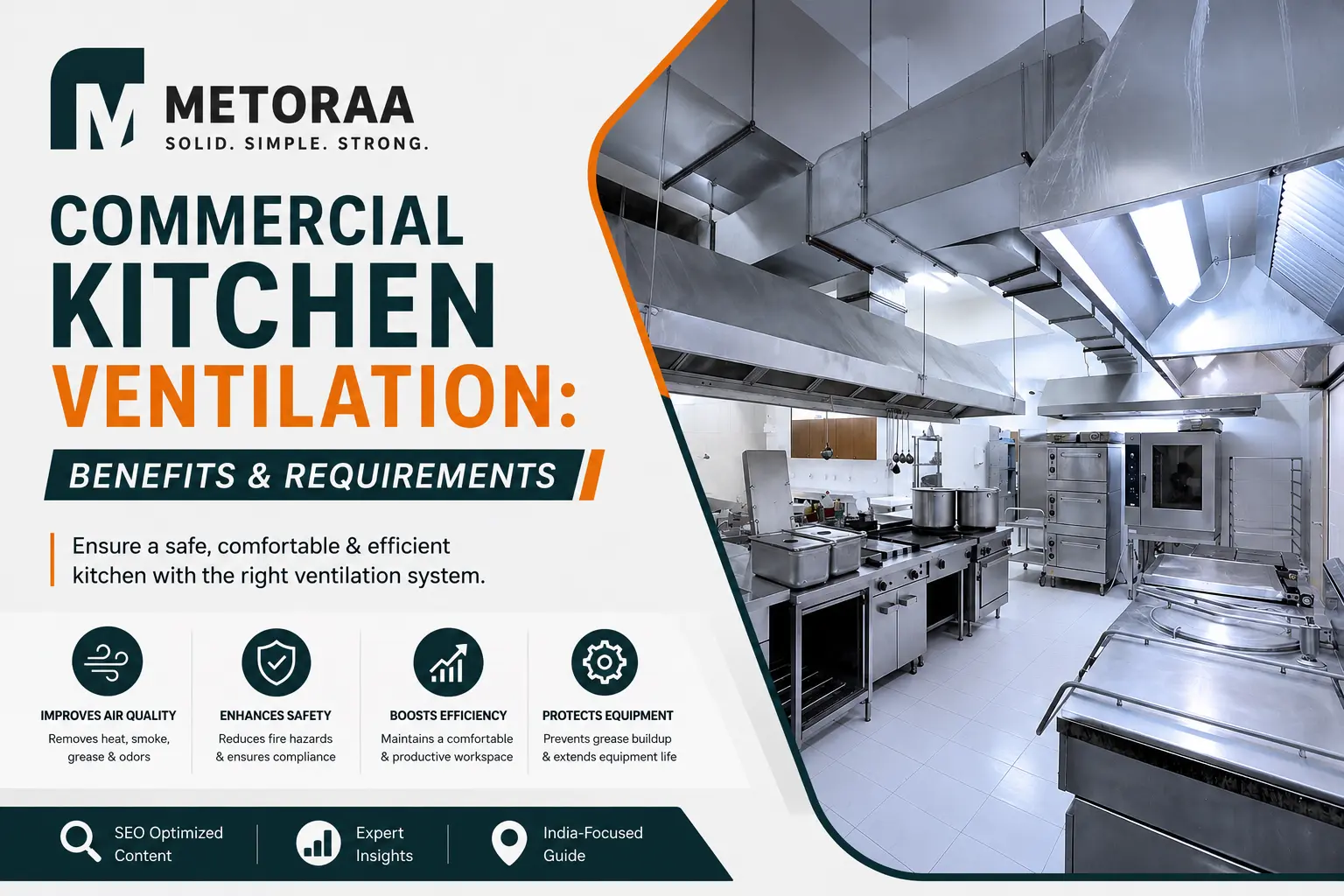
Commercial kitchen ventilation is one of the most critical components of a successful food service operation. Restaurants, hotels, cloud kitchens, hospitals, educational institutions, and industrial cafeterias generate large amounts of heat, smoke, grease particles, and odors during daily cooking activities. Without an efficient ventilation system, these contaminants can negatively impact employee comfort, food quality, equipment performance, and regulatory compliance. A professionally designed commercial kitchen ventilation system creates a healthier working environment, improves operational efficiency, and helps businesses maintain the highest standards of safety and hygiene. As the hospitality industry continues to evolve, ventilation systems have become an essential investment rather than an optional addition.
Why Commercial Kitchen Ventilation is Important
Commercial kitchens operate under demanding conditions where cooking equipment continuously generates heat, moisture, grease vapours, and airborne particles. Proper ventilation removes these contaminants and maintains balanced airflow throughout the facility. Effective ventilation improves indoor air quality, enhances employee productivity, protects expensive kitchen equipment, and reduces the risk of fire hazards. Businesses that invest in high-quality ventilation systems often experience smoother operations, lower maintenance costs, and better compliance with food safety and workplace regulations.
Understanding Commercial Kitchen Ventilation Systems
A commercial kitchen ventilation system is designed to extract contaminated air and replace it with fresh air to maintain a safe and comfortable environment. These systems typically include exhaust hoods, ducting networks, grease filters, exhaust fans, fresh air units, and air handling systems. Together, these components work to control temperature, humidity, smoke, and airborne grease particles generated during food preparation. Proper ventilation design ensures that kitchen operations remain efficient while supporting employee health and regulatory compliance.
Key Requirements for Commercial Kitchen Ventilation
Every commercial kitchen requires a ventilation system that matches its size, cooking volume, equipment configuration, and operational needs. Factors such as airflow capacity, exhaust rates, duct sizing, filtration efficiency, and fresh air replacement must be carefully evaluated during the planning stage. Compliance with local fire safety and building regulations is also essential to ensure safe and effective operation. Professional ventilation planning helps businesses achieve optimal performance while avoiding costly modifications in the future.
Commercial Kitchen Ventilation Checklist
- Kitchen Exhaust Hoods
- Fresh Air Systems
- Exhaust Fans
- Grease Filters
- Air Handling Units
- Ventilation Ducting
- Fire Safety Integration
- Make-Up Air Systems
- Airflow Balancing
- Maintenance Access Points
- Energy-Efficient Controls
- Compliance with Safety Standards
Components of a Commercial Kitchen Ventilation System
| Ventilation Component | Purpose | Importance |
| Exhaust Hood | Captures smoke and grease | High |
| Exhaust Fan | Removes contaminated air | High |
| Grease Filters | Traps grease particles | High |
| Ducting System | Transfers exhaust air | High |
| Fresh Air Unit | Supplies clean air | High |
| Make-Up Air System | Balances air pressure | High |
| Air Handling Unit | Improves airflow quality | Medium |
| Fire Safety Integration | Enhances safety compliance | High |
Commercial Kitchen Exhaust Hoods
Exhaust hoods are the most visible and important component of a commercial kitchen ventilation system. Positioned directly above cooking equipment, exhaust hoods capture heat, smoke, steam, grease particles, and odors before they spread throughout the kitchen. Proper hood sizing and placement are essential for maximizing ventilation efficiency and maintaining a comfortable work environment. Well-designed exhaust hood systems contribute significantly to workplace safety and operational performance.
Importance of Fresh Air Systems
Fresh air systems are responsible for replacing the air removed by exhaust systems. Without adequate fresh air supply, kitchens can experience negative air pressure, making ventilation less effective and creating uncomfortable working conditions. Properly designed fresh air systems maintain balanced airflow, improve indoor air quality, and ensure that ventilation equipment operates efficiently. Fresh air integration is a key requirement in modern commercial kitchen design.
Role of Exhaust Fans in Kitchen Ventilation
Exhaust fans generate the airflow necessary to remove contaminated air from the kitchen environment. These fans work in conjunction with exhaust hoods and ducting systems to transport heat, smoke, and airborne particles outside the building. Selecting the correct fan capacity is essential for achieving effective ventilation performance. High-quality exhaust fans improve air movement while reducing noise levels and energy consumption.
Grease Filters and Fire Safety
Grease filters play a critical role in trapping airborne grease particles generated during cooking operations. By preventing grease accumulation within ducting systems, filters reduce fire risks and improve overall ventilation performance. Regular cleaning and maintenance of grease filters are essential to ensure continued efficiency and compliance with fire safety regulations. Proper filtration also extends the lifespan of ventilation equipment and reduces maintenance costs.
Ventilation Ducting Design Requirements
Ventilation ducting serves as the pathway through which contaminated air is transported out of the kitchen. Duct systems must be designed to minimize airflow resistance while supporting efficient extraction performance. Proper duct sizing, routing, insulation, and accessibility for cleaning are critical factors in achieving long-term system reliability. Professionally engineered ducting systems contribute to energy efficiency, safety, and regulatory compliance.
Benefits of Commercial Kitchen Ventilation Systems
A well-designed ventilation system delivers numerous operational and financial benefits. It improves employee comfort by reducing heat and humidity, enhances air quality by removing contaminants, protects equipment from grease buildup, and supports compliance with health and safety regulations. Effective ventilation also reduces odor migration, improves customer experiences, and lowers the risk of fire-related incidents. These advantages make ventilation one of the most valuable investments in any commercial kitchen.
Energy-Efficient Kitchen Ventilation Solutions
Modern ventilation systems increasingly incorporate energy-efficient technologies designed to reduce operating costs while maintaining high performance. Variable-speed exhaust fans, intelligent control systems, energy recovery units, and automated airflow management technologies help businesses optimize ventilation performance and reduce utility consumption. Investing in energy-efficient ventilation solutions contributes to sustainability goals while improving long-term profitability.
Common Ventilation Mistakes to Avoid
Many businesses underestimate ventilation requirements during kitchen planning, resulting in inadequate airflow, poor air quality, and operational inefficiencies. Other common mistakes include selecting undersized exhaust systems, neglecting fresh air replacement, using improper duct designs, and failing to schedule routine maintenance. These issues can lead to increased energy costs, reduced equipment lifespan, and regulatory compliance challenges. Working with experienced ventilation specialists helps avoid these costly mistakes.
Commercial Kitchen Ventilation Standards and Compliance
Commercial kitchens must comply with various fire safety, building, and food safety regulations related to ventilation design and operation. Compliance requirements often address airflow rates, grease management, exhaust hood performance, duct construction, and fire suppression integration. Adhering to these standards helps businesses maintain safe working environments while avoiding penalties and operational disruptions. Professional system design ensures that all regulatory requirements are properly addressed.
Latest Trends in Commercial Kitchen Ventilation 2026
The commercial kitchen ventilation industry continues to evolve with advancements in automation, smart controls, and energy management technologies. Modern systems use sensors and intelligent monitoring tools to optimize airflow based on cooking activity, reducing energy consumption without compromising performance. Sustainability initiatives are also driving the adoption of environmentally friendly ventilation solutions that improve efficiency while supporting green building objectives.
Why Businesses Choose Metoraa
Metoraa specializes in designing and installing advanced commercial kitchen ventilation systems for restaurants, hotels, cloud kitchens, hospitals, educational institutions, and industrial food service facilities. Our expertise includes ventilation planning, exhaust hood design, ducting systems, fresh air integration, energy-efficient solutions, and complete project execution. By delivering customized ventilation systems tailored to operational requirements, Metoraa helps businesses achieve superior air quality, safety, and performance.
Conclusion
A commercial kitchen ventilation system is essential for maintaining a safe, efficient, and compliant food service environment. From exhaust hoods and fresh air systems to grease filtration and airflow management, every component plays a critical role in supporting operational success. Investing in a professionally designed ventilation solution improves employee comfort, protects equipment, enhances safety, and reduces long-term operating costs. Partnering with experienced specialists like Metoraa ensures access to reliable ventilation systems designed to meet both current requirements and future business growth.