How to Design a Commercial Kitchen: Complete Planning Guide
A well-designed commercial kitchen improves efficiency, food quality, and staff productivity. From layout planning and equipment selection to ventilation and workflow optimization, every detail matters. This complete guide explains how to design a commercial kitchen that meets operational requirements and supports long-term business growth.
Author
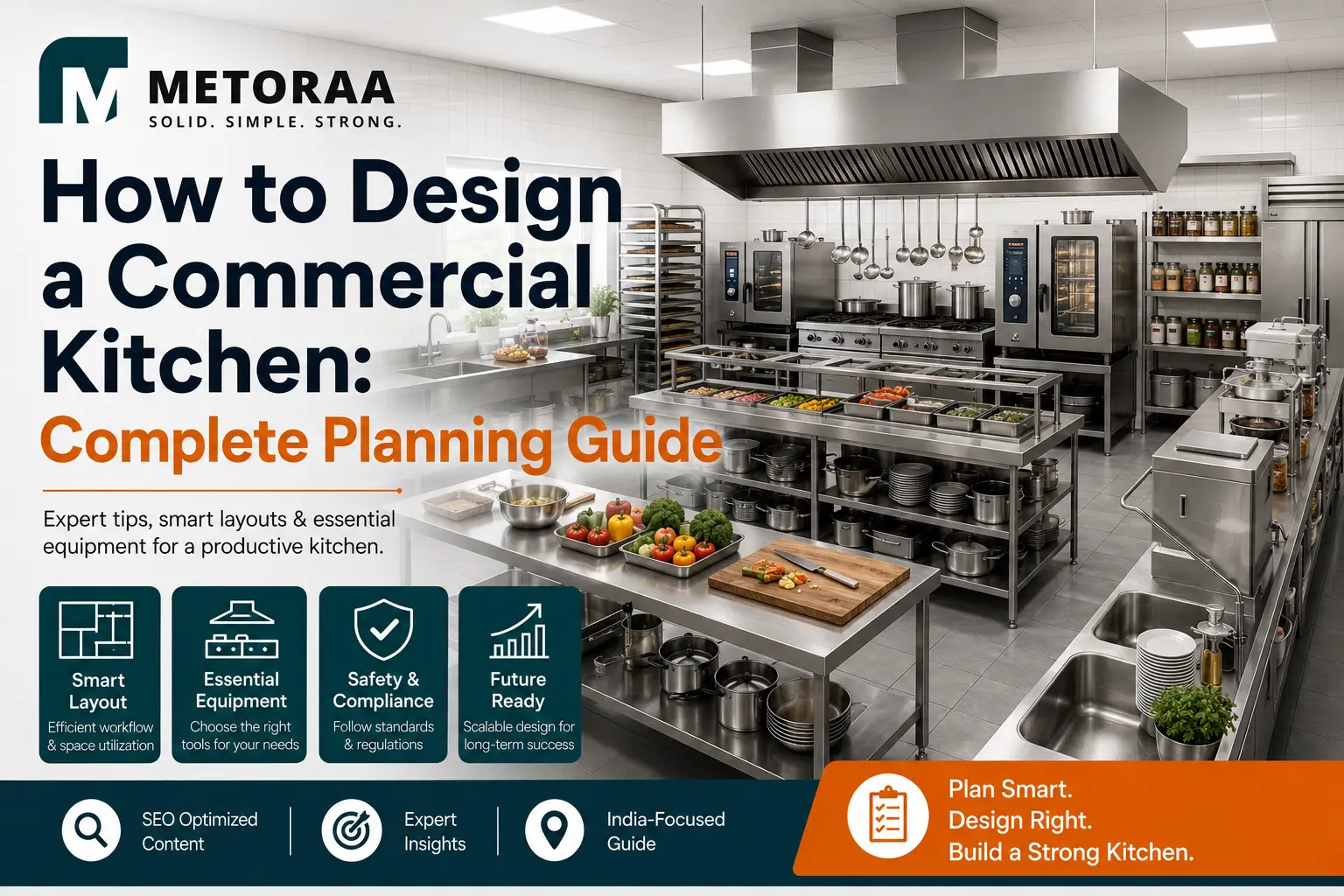
Designing a commercial kitchen is one of the most important steps in building a successful restaurant, hotel, cloud kitchen, cafeteria, hospital kitchen, or food service facility. An efficient kitchen layout improves workflow, reduces operational costs, enhances food safety, and increases productivity. A professionally planned kitchen ensures that every area—from receiving ingredients to serving finished meals—works together seamlessly. Whether you are launching a new food business or renovating an existing facility, understanding the fundamentals of commercial kitchen design can help you maximize efficiency and profitability.
Why Commercial Kitchen Design Matters
Commercial kitchen design directly impacts operational performance, employee productivity, food quality, and customer satisfaction. A poorly planned kitchen can create bottlenecks, increase preparation times, and raise operational costs. On the other hand, an optimized kitchen layout allows staff to work efficiently, reduces unnecessary movement, and supports faster service delivery. Proper kitchen design also ensures compliance with food safety regulations and creates a safer working environment for employees.
Understanding Commercial Kitchen Planning
Commercial kitchen planning involves analyzing menu requirements, available space, workflow patterns, utility requirements, equipment specifications, and future expansion needs. Every kitchen should be designed around operational goals rather than simply fitting equipment into available space. Effective planning helps businesses maximize productivity while maintaining flexibility for growth. Professional commercial kitchen consultants evaluate these factors to create layouts that deliver long-term efficiency and performance.
Types of Commercial Kitchen Layouts
Different businesses require different kitchen layouts depending on their menu, production volume, and operational objectives. Assembly line layouts are commonly used in fast-food restaurants due to their speed and efficiency. Island layouts place major cooking equipment in a central location, making them ideal for high-volume operations. Zone-style kitchens separate preparation, cooking, cleaning, and storage areas to improve organization and workflow. Open kitchen concepts allow customers to view food preparation activities, creating an engaging dining experience while maintaining operational efficiency.
Key Factors to Consider Before Designing a Commercial Kitchen
Before beginning the design process, businesses must evaluate available space, menu complexity, customer volume, staffing requirements, utility connections, ventilation needs, and future growth plans. Understanding these factors helps determine the most suitable equipment, layout configuration, and infrastructure requirements. Proper planning reduces costly modifications and ensures that the kitchen can adapt to changing business demands over time.
Essential Steps to Design a Commercial Kitchen
Commercial Kitchen Design Checklist
- Define Menu Requirements
- Analyze Available Space
- Create Workflow Layout
- Select Commercial Kitchen Equipment
- Plan Ventilation Systems
- Design Food Storage Areas
- Allocate Cleaning Stations
- Install Utility Connections
- Ensure Safety Compliance
- Plan for Future Expansion
Commercial Kitchen Design Components
| Design Component | Purpose | Importance |
| Kitchen Layout | Organizes workflow | High |
| Cooking Equipment | Food preparation | High |
| Refrigeration Systems | Food preservation | High |
| Ventilation Systems | Air quality management | High |
| Food Preparation Areas | Efficient processing | High |
| Cleaning Stations | Hygiene maintenance | High |
| Storage Solutions | Inventory management | High |
| Utility Infrastructure | Equipment support | High |
Planning the Kitchen Workflow
An efficient workflow is the foundation of successful commercial kitchen design. The kitchen should follow a logical sequence that begins with receiving ingredients and continues through storage, preparation, cooking, plating, service, and cleaning. This process minimizes employee movement and reduces delays during peak operating hours. Workflow optimization improves productivity while helping maintain food quality and consistency. Businesses that prioritize workflow planning often experience smoother operations and better customer service outcomes.
Choosing the Right Commercial Kitchen Equipment
Equipment selection should be based on menu requirements, production capacity, available space, and operational goals. Restaurants may require gas ranges, ovens, griddles, fryers, and refrigeration units, while cloud kitchens may prioritize efficiency-focused equipment designed for high-volume order fulfillment. Selecting durable, energy-efficient equipment reduces operating costs and improves long-term performance. Working with experienced suppliers ensures that businesses invest in equipment capable of supporting future growth and evolving operational needs.
Commercial Kitchen Ventilation Planning
Ventilation is critical for maintaining a safe, comfortable, and compliant commercial kitchen environment. Cooking operations generate heat, smoke, grease, and odors that must be effectively removed. Proper ventilation systems include exhaust hoods, fresh air systems, grease filters, ducting networks, and exhaust fans. Effective ventilation improves indoor air quality, protects equipment, enhances employee comfort, and supports compliance with fire and safety regulations. Investing in a professionally designed ventilation system is essential for long-term kitchen performance.
Food Storage and Refrigeration Planning
Proper storage planning helps maintain food quality, minimize waste, and support inventory management. Commercial kitchens require dedicated storage zones for dry goods, refrigerated items, frozen products, and cleaning supplies. Refrigeration systems should be positioned strategically to support efficient workflow while maintaining food safety standards. Well-organized storage areas reduce retrieval times and improve overall operational efficiency.
Importance of Stainless-steel Fabrication
Stainless-steel fabrication plays a vital role in modern commercial kitchen design. Stainless-steel worktables, shelves, sinks, counters, and storage systems provide durability, hygiene, and ease of maintenance. The material's corrosion resistance and non-porous surface make it ideal for food preparation environments where cleanliness is essential. High-quality stainless-steel fabrication contributes to operational efficiency while helping businesses comply with food safety regulations.
Safety and Regulatory Compliance
Commercial kitchens must comply with food safety, fire safety, and workplace safety regulations. Proper kitchen design includes fire suppression systems, emergency exits, non-slip flooring, adequate lighting, ventilation systems, and hygienic food preparation areas. Compliance not only protects employees and customers but also helps businesses avoid penalties and operational disruptions. Incorporating safety measures during the design stage is significantly more cost-effective than implementing corrective actions later.
Energy-Efficient Commercial Kitchen Design
Energy efficiency has become a major priority for food service businesses seeking to reduce operating costs and environmental impact. Modern commercial kitchens incorporate energy-efficient cooking equipment, refrigeration systems, lighting solutions, and ventilation technologies. These innovations help businesses lower utility expenses while maintaining high performance standards. Sustainable kitchen design also supports corporate environmental initiatives and enhances brand reputation among environmentally conscious consumers.
Common Commercial Kitchen Design Mistakes
Many businesses make the mistake of prioritizing aesthetics over functionality, resulting in inefficient workflows and operational challenges. Other common mistakes include selecting undersized equipment, neglecting ventilation requirements, failing to plan for future expansion, and overlooking utility infrastructure needs. Poor storage planning and inadequate workspace allocation can also negatively impact productivity. Working with experienced commercial kitchen consultants helps businesses avoid these costly mistakes and achieve optimal design outcomes.
Latest Commercial Kitchen Design Trends in 2026
The commercial kitchen industry continues to evolve with advancements in technology and changing consumer expectations. Smart kitchen systems, IoT-enabled equipment, modular layouts, automation technologies, and energy-efficient appliances are becoming increasingly popular. Cloud kitchen growth is also driving demand for compact, highly efficient kitchen designs that maximize productivity within limited spaces. Businesses that adopt modern design trends can improve operational performance while maintaining a competitive advantage in the marketplace.
Why Businesses Choose Metoraa for Commercial Kitchen Design
Metoraa delivers end-to-end commercial kitchen solutions tailored to the unique requirements of restaurants, hotels, hospitals, educational institutions, cloud kitchens, and industrial food service operations. Our services include kitchen planning, layout design, equipment manufacturing, stainless-steel fabrication, ventilation system design, installation, and project management. With a focus on innovation, quality, and operational efficiency, Metoraa helps businesses create commercial kitchens that support long-term success and sustainable growth.
Conclusion
Designing a commercial kitchen requires careful planning, strategic equipment selection, workflow optimization, and compliance with industry standards. A well-designed kitchen improves efficiency, enhances food quality, reduces operating costs, and supports business growth. From layout planning and ventilation design to refrigeration systems and stainless-steel fabrication, every component contributes to operational success. Partnering with experienced commercial kitchen experts like Metoraa ensures that businesses receive customized solutions designed to meet current needs while supporting future expansion.