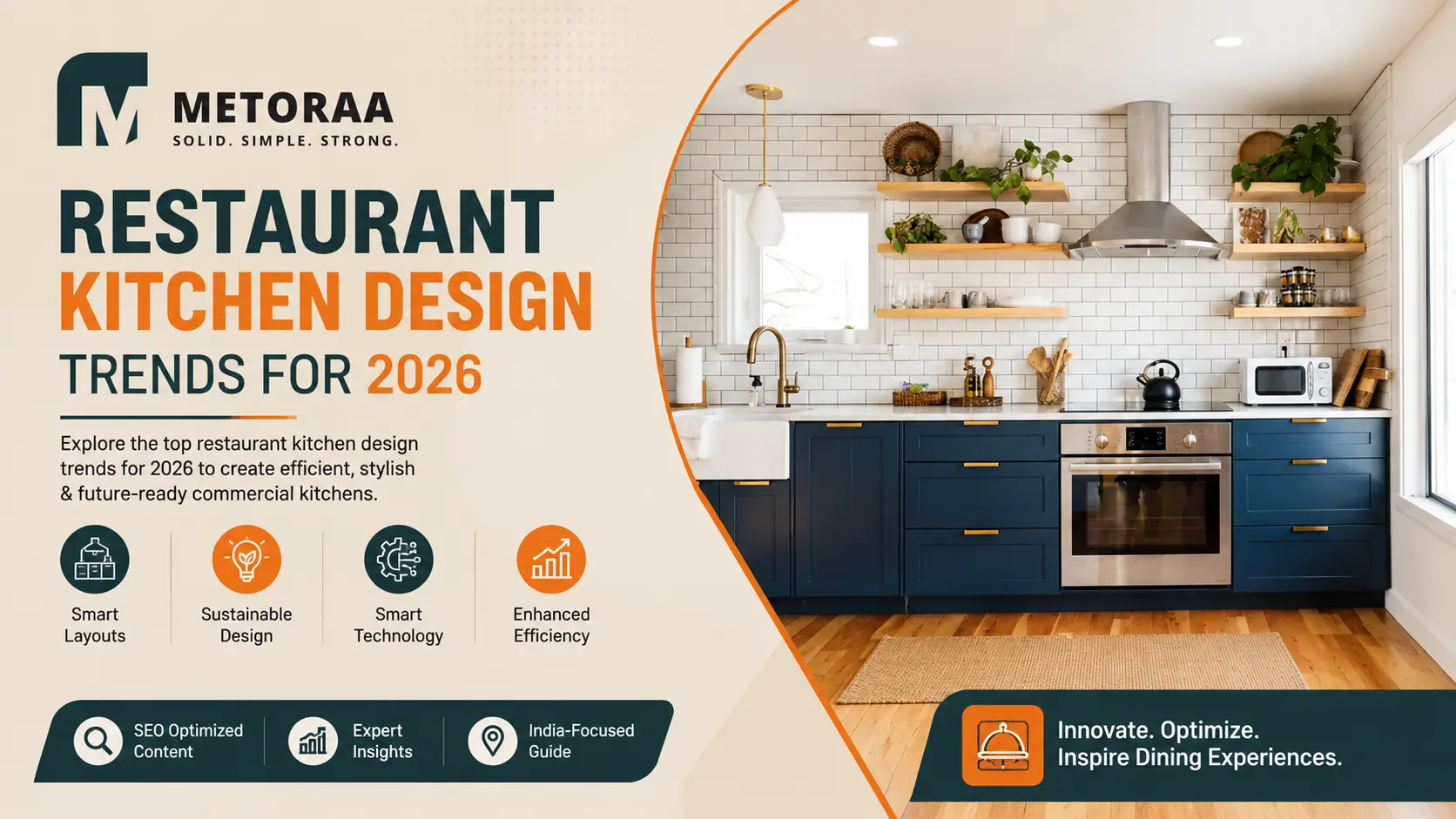
Restaurant Kitchen Design Trends for 2026
Restaurant kitchens are evolving rapidly as technology, sustainability, and operational efficiency become top priorities. From smart equipment and automation to modular layouts and energy-efficient systems, modern kitchen designs are transforming the food service industry. This guide explores the top restaurant kitchen design trends shaping 2026.
Author
The restaurant industry is undergoing significant transformation as businesses adapt to changing customer expectations, rising operational costs, technological advancements, and sustainability goals. Modern restaurant kitchens are no longer simply food preparation spaces; they have become highly efficient operational hubs designed to maximize productivity, improve food quality, and support business growth. Restaurant owners are increasingly investing in innovative kitchen designs that integrate smart technology, optimize workflow, reduce energy consumption, and improve employee comfort. As competition continues to intensify, adopting the latest restaurant kitchen design trends can help businesses stay ahead while delivering exceptional dining experiences.
Why Restaurant Kitchen Design is Evolving
Traditional kitchen designs often struggle to meet the demands of modern food service operations. Rising labour costs, increasing customer expectations, growing delivery volumes, and sustainability requirements have created a need for more efficient kitchen environments. Today's restaurant kitchens must balance speed, flexibility, food safety, and operational efficiency while supporting multiple service channels. As a result, businesses are embracing innovative design strategies that improve performance and create future-ready kitchen infrastructures.
The Growing Importance of Modern Kitchen Design
Modern restaurant kitchen design focuses on creating environments that enhance workflow, maximize available space, improve employee productivity, and support consistent food quality. Well-designed kitchens reduce operational bottlenecks, minimize unnecessary movement, and enable faster service during peak periods. By combining functional layouts with advanced equipment and technology, restaurants can improve profitability while delivering superior customer experiences.
How Technology is Transforming Restaurant Kitchens
Technology continues to play a major role in reshaping commercial kitchen operations. Smart appliances, connected equipment, automated monitoring systems, and data-driven management tools allow restaurant operators to optimize performance in real time. These innovations help improve efficiency, reduce maintenance costs, and provide greater visibility into daily operations. Restaurants that adopt technology-driven kitchen designs are often better equipped to respond to changing market conditions and customer demands.
Restaurant Kitchen Design Trends Checklist for 2026
- Smart Kitchen Technology
- Energy-Efficient Equipment
- Modular Kitchen Layouts
- Automation Systems
- IoT-Enabled Equipment
- Sustainable Kitchen Design
- Advanced Ventilation Systems
- Open Kitchen Concepts
- Space Optimization Solutions
- Touchless Technology Integration
- Data-Driven Kitchen Management
- Cloud Kitchen Adaptability
Top Restaurant Kitchen Design Trends in 2026
| Design Trend | Primary Benefit | Industry Impact |
| Smart Kitchens | Operational efficiency | High |
| Energy-Efficient Equipment | Lower utility costs | High |
| Modular Layouts | Flexibility and scalability | High |
| Automation Systems | Improved productivity | High |
| IoT Integration | Real-time monitoring | High |
| Sustainable Design | Environmental responsibility | High |
| Open Kitchen Concepts | Enhanced customer experience | Medium |
| Advanced Ventilation | Improved air quality | High |
Smart Kitchen Technology
Smart kitchen technology is becoming a standard feature in modern restaurant operations. Connected appliances can communicate with management systems, monitor performance, track energy consumption, and alert operators to maintenance requirements before breakdowns occur. This technology helps reduce downtime, improve equipment lifespan, and optimize daily operations. Restaurants increasingly rely on smart systems to improve efficiency and gain greater control over kitchen performance.
Energy-Efficient Commercial Kitchen Equipment
Energy efficiency remains one of the most important trends in restaurant kitchen design. Rising utility costs have encouraged restaurants to invest in equipment that delivers high performance while consuming less energy. Modern cooking appliances, refrigeration systems, lighting solutions, and ventilation technologies are designed to reduce electricity and gas consumption without compromising productivity. Energy-efficient kitchens not only lower operating costs but also support sustainability initiatives and environmental compliance goals.
Modular Kitchen Layouts
Modular kitchen layouts are gaining popularity because they offer flexibility and scalability. These layouts allow businesses to reconfigure workstations, equipment, and production areas as operational needs change. Restaurants can adapt to menu updates, increased customer demand, and evolving service models without requiring major renovations. Modular designs also improve space utilization and simplify future expansion projects.
Automation in Food Preparation
Automation technologies are helping restaurants address labour shortages while improving consistency and productivity. Automated food preparation equipment can perform repetitive tasks such as slicing, mixing, portioning, and cooking with minimal human intervention. These systems reduce preparation times, improve accuracy, and help maintain consistent food quality across all service periods. Automation is expected to play an increasingly important role in restaurant operations throughout 2026 and beyond.
IoT-Enabled Kitchen Equipment
The Internet of Things (IoT) is transforming commercial kitchen management by connecting equipment to centralized monitoring platforms. IoT-enabled appliances provide real-time data on temperature, performance, maintenance requirements, and energy consumption. This information helps operators make informed decisions, identify inefficiencies, and reduce the risk of equipment failure. Restaurants that leverage IoT technology often experience improved operational control and reduced maintenance costs.
Sustainable Restaurant Kitchen Design
Sustainability continues to influence restaurant kitchen planning as businesses seek to reduce environmental impact and improve resource efficiency. Sustainable kitchens incorporate energy-efficient equipment, water-saving technologies, waste reduction strategies, and environmentally friendly materials. Restaurants that prioritize sustainability often benefit from lower operating expenses, stronger brand reputation, and increased appeal among environmentally conscious consumers.
Advanced Commercial Kitchen Ventilation Systems
Modern ventilation systems are designed to improve air quality while reducing energy consumption. Advanced exhaust hoods, intelligent airflow controls, energy recovery technologies, and variable-speed fan systems help restaurants maintain comfortable working environments while optimizing operational efficiency. Improved ventilation also enhances employee safety, protects equipment, and supports regulatory compliance.
Open Kitchen Concepts
Open kitchen designs continue to gain popularity among restaurants seeking to enhance customer engagement and transparency. These layouts allow guests to observe food preparation activities, creating a more interactive dining experience. Open kitchens also encourage higher cleanliness standards and reinforce customer confidence in food quality and kitchen operations.
Space Optimization and Multi-Functional Workstations
As restaurant real estate costs continue to rise, businesses are focusing on maximizing every square foot of available space. Multi-functional workstations, compact equipment, and efficient storage solutions help restaurants improve productivity without increasing facility size. Space optimization is particularly important for urban restaurants, cloud kitchens, and quick-service operations where space constraints are common.
Cloud Kitchen-Ready Designs
The rapid growth of food delivery services has increased demand for cloud kitchen-friendly layouts. These kitchens prioritize efficiency, streamlined workflows, and technology integration to support high-volume delivery operations. Many restaurant operators are incorporating cloud kitchen principles into traditional restaurant designs to improve flexibility and accommodate evolving service models.
Touchless Technology and Enhanced Hygiene
Touchless technologies have become increasingly important as restaurants focus on hygiene and food safety. Motion-activated faucets, automated dispensers, contactless equipment controls, and digital monitoring systems help reduce contamination risks while improving operational efficiency. Enhanced hygiene measures are expected to remain a priority for restaurant operators throughout 2026.
Common Challenges When Adopting New Kitchen Design Trends
While modern design innovations offer numerous benefits, businesses must carefully evaluate implementation costs, staff training requirements, infrastructure compatibility, and long-term maintenance needs. Poor planning can lead to operational disruptions and reduced return on investment. Partnering with experienced commercial kitchen consultants helps businesses identify the most suitable technologies and design strategies based on their unique operational goals.
Why Restaurants Choose Metoraa
Metoraa delivers innovative commercial kitchen solutions designed to help restaurants adapt to the future of food service. Our expertise includes kitchen planning, layout design, equipment manufacturing, stainless-steel fabrication, ventilation systems, technology integration, installation, and project management. By combining industry knowledge with cutting-edge solutions, Metoraa helps businesses create efficient, scalable, and future-ready kitchen environments.
Conclusion
Restaurant kitchen design is evolving rapidly as technology, sustainability, automation, and operational efficiency become key drivers of business success. The trends shaping 2026 are helping restaurants improve productivity, reduce costs, enhance food quality, and deliver exceptional customer experiences. From smart kitchen systems and energy-efficient equipment to modular layouts and advanced ventilation solutions, modern kitchen design is transforming the food industry. Partnering with experts like Metoraa ensures that restaurants can successfully implement these innovations and remain competitive in an ever-changing marketplace.